
End the Ache, Keep the Tooth
Root Canal Treatment in Scarborough, Explained Calmly
The root canal is not the source of the pain — it is the end of it. One treatment removes the infection and lets you keep the tooth you were afraid of losing.
A deep toothache that throbs on its own usually means the nerve inside the tooth is infected, and no amount of waiting will fix that. Root canal therapy clears the infection at its source and preserves your natural tooth. At Midland Dental Center, at Midland and Eglinton in Scarborough, we treat anxious patients every week — with thorough numbing, an unhurried pace, and a running explanation of exactly what is happening, most people leave wondering why they dreaded it.
New patients welcome — weekday and weekend availability.
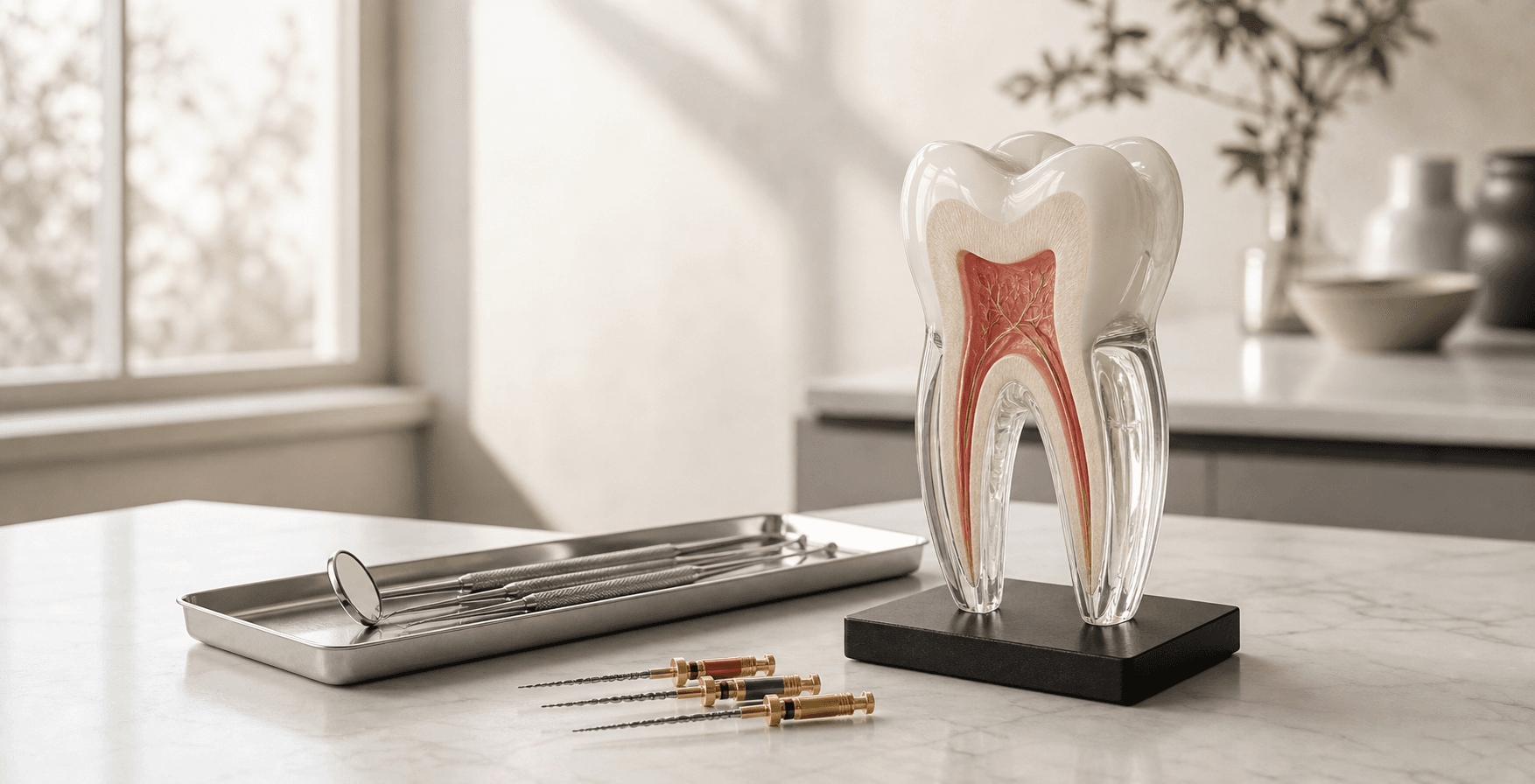
What is actually happening inside an aching tooth
Beneath its hard enamel shell, every tooth houses a living core of nerves and blood vessels — the pulp. Deep decay or a crack gives bacteria a route into that chamber, and once infection takes hold there, pressure builds inside a space that cannot expand. That trapped pressure is the throbbing that wakes people at night, makes biting unbearable, and radiates into the jaw or ear.
Root canal therapy addresses the problem at its origin. The infected pulp is removed, the narrow canals inside the roots are meticulously cleaned and disinfected, and the space is sealed so bacteria cannot recolonize it. With the infection gone, the pressure and the pain go with it. The tooth stays in your mouth, in your bite, doing its job.
The reputation problem is really a timing problem: people remember the agony they were in before treatment and attach it to the procedure itself. In truth, with the tooth profoundly numbed, having a root canal feels much like having a deep filling placed. The appointment is where the pain ends, not where it happens.
The four stages of saving a tooth
Profound numbing, verified
We anaesthetize the tooth thoroughly and confirm it is completely numb before touching anything. Throughout the procedure you should feel gentle pressure and vibration only — and we check in with you as we go.
Removing the infection
Through a small opening in the biting surface, the inflamed or infected pulp is lifted out and each slender root canal is cleaned, shaped, and disinfected until no bacteria remain.
Sealing the canals
The cleaned canals are filled with a biocompatible sealing material, closing the door on reinfection. The access opening is then closed with a filling.
Reinforcing the tooth
A treated tooth gradually becomes more brittle, so for most back teeth we recommend a crown as the finishing step — usually placed at a follow-up visit once the tooth has settled.
Have questions about root canal therapy? Talk to us — our team is happy to walk you through it.
Request AppointmentAn honest accounting of root canal therapy
Benefits
- Eliminates the toothache by removing its cause rather than masking it
- Preserves your own tooth — no gap, no shifting neighbours, no replacement needed
- Contains the infection before it spreads deeper into the jaw
- Properly restored afterward, the tooth can serve for decades
Honest limits
- Most treated back teeth need a crown afterward, which is a separate step and cost
- A tooth split by a deep fracture may be unsalvageable no matter how well the canals are treated
- A small percentage of cases heal incompletely and need retreatment or a specialist's care
- The treatment fixes the tooth, not the habits or conditions that let decay reach the nerve
Setting the record straight, and what recovery looks like
Two myths deserve direct answers. First, that root canals are torturous — modern anaesthetic has made that obsolete, and the procedure is routinely described by our patients as anticlimactic. Second, that pulling the tooth is the simpler choice — extraction trades a treatable tooth for a permanent gap, and closing that gap properly with a bridge or implant is typically a longer and costlier road than saving the tooth would have been.
Afterward, expect the numbness to fade over a few hours and the tooth to feel bruised for a day or two, particularly when biting. Over-the-counter pain relief handles this for nearly everyone, and most patients are back at work the same day or the next morning. Any swelling from a pre-existing abscess subsides as the infection clears.
While you wait for the permanent crown or filling, chew on the opposite side and keep the area clean with normal brushing. Discomfort should trend steadily downward — if it reverses course and worsens after a few days, that is unusual, so call us and we will see you promptly.
How root canal fees are determined
The complexity of the tooth drives the fee. A front tooth typically has one canal; molars hide three or four, often curved, which demand considerably more time and precision.
- The tooth's position — single-canal front teeth versus multi-canal molars
- The number and curvature of the canals inside the roots
- The crown most treated back teeth need afterward, which is its own procedure
- Diagnostic imaging, and specialist referral in the rare complicated case
Extraction is cheaper on the day, and we will never hide that — but the full comparison includes replacing the lost tooth later, which usually tips the economics decisively toward saving it. We help you sort out insurance and CDCP questions, and a written estimate comes before treatment, always.
Learn more about using your dental insurance or the Canadian Dental Care Plan.
Insurance and CDCP for root canal treatment
Root canal therapy sits within the coverage of many dental plans, though the crown that typically follows is often categorized separately with its own limits. Our team can verify both parts of your coverage in advance and file the claims for you, so the financial picture is clear before the clinical work starts.
If you are eligible for the Canadian Dental Care Plan (CDCP), we will go over what it may contribute toward the root canal and the crown. Because outcomes hinge on individual eligibility, we make no coverage promises — only the commitment that you will see a clear written estimate before deciding anything.
Frequently asked questions
Related treatments
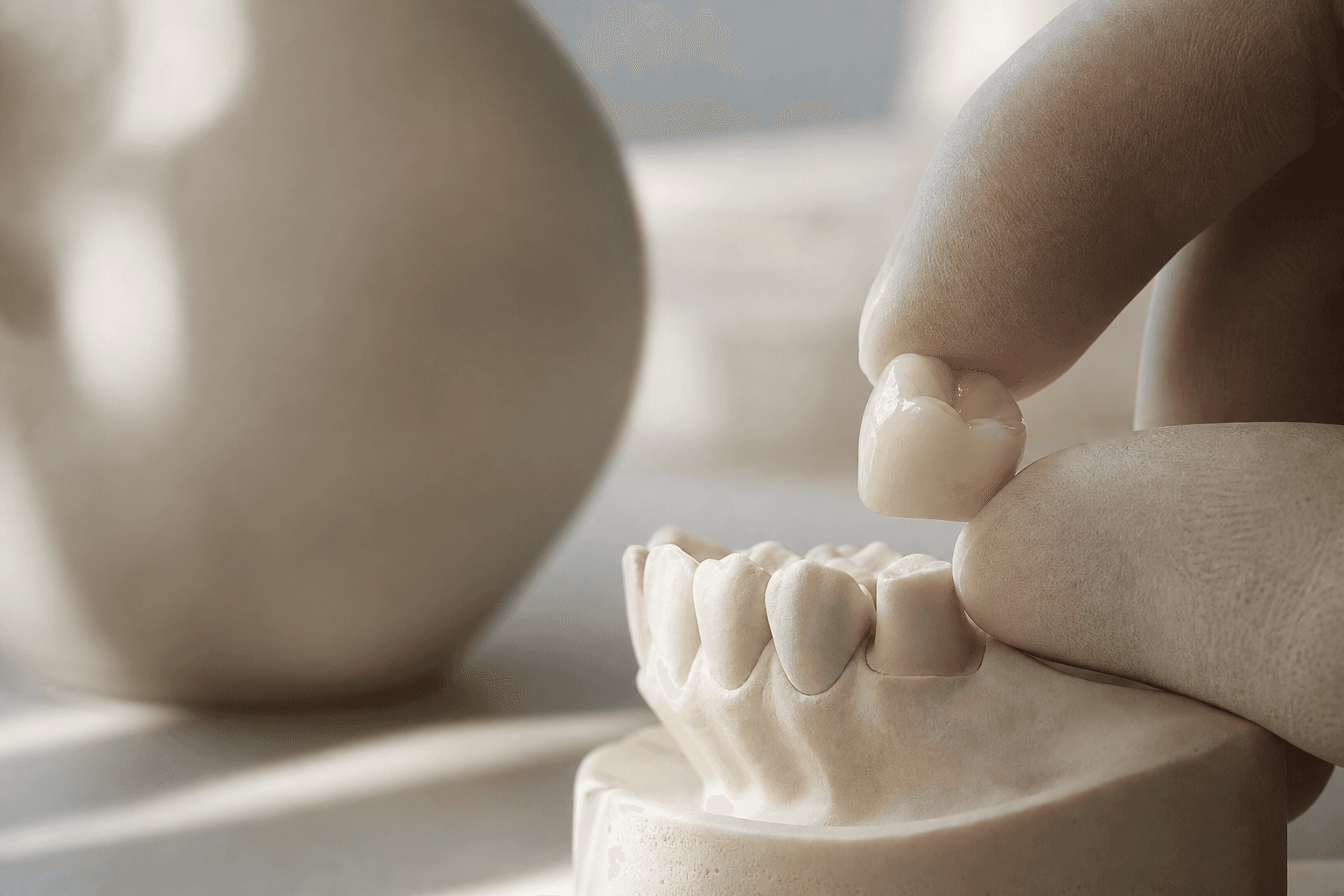
Dental Crowns
When a tooth has lost too much of itself to patch, a custom-crafted crown wraps it in a new outer shell — strong enough to chew on, shaped to belong in your smile.
Learn more
Emergency Dentist
A dental emergency feels chaotic — your care should not. One phone call gets you triaged, guided, and into the chair, with same-day emergency visits when the schedule allows.
Learn more
Tooth Extractions
Removing a tooth is never our first idea — but when it is genuinely the right one, we make the experience calm and the recovery well-planned.
Learn moreReady to talk about root canal therapy?
The root canal is not the source of the pain — it is the end of it. One treatment removes the infection and lets you keep the tooth you were afraid of losing.