
Fixed, Focused, Proven
Braces in Scarborough
Brackets and wires remain the workhorse of orthodontics — steady, always-on movement for cases simple and complex alike.
Some bites need an appliance that never takes a day off. Braces deliver exactly that: fixed brackets and a precision wire applying continuous, dentist-directed pressure until teeth reach their planned positions. At Midland Dental Center at Midland and Eglinton, orthodontic care is a particular focus of Dr. Ghazala Zaid, our principal dentist, who plans each case with modern imaging and explains the road ahead before you commit to it.
New patients welcome — weekday and weekend availability.

Why fixed braces still lead for complex movement
For all the innovation in orthodontics, the mechanics of braces remain hard to beat. Because the appliance is bonded to your teeth, it works every hour of every day without depending on memory, motivation, or a tray finding its way back in after lunch. And because the wire connects every bracket into one engineered system, it can produce movements — big rotations, root repositioning, genuine bite correction — that removable appliances manage less predictably.
That reliability is why our Scarborough practice keeps braces at the heart of its orthodontic care rather than treating them as the old-fashioned option. Dr. Ghazala Zaid, our principal dentist, has a clinical focus on orthodontics: she reads each case from digital imaging, plans how every tooth needs to travel, and is equally straightforward about the cases where clear aligners would honestly serve you just as well — or where a specialist referral is the right call.
The modern choice is really between two finishes of the same machine. Stainless-steel brackets are compact, tough, and economical — the default for younger patients and anyone unbothered by a visible appliance. Ceramic brackets do the identical job in a tooth-coloured material that softens the look considerably at conversational distance, a difference many working adults and image-conscious teens decide is worth the modest premium.
Bites and situations braces handle best
Braces have the broadest reach of any orthodontic appliance. They tend to be the strongest recommendation when your situation includes:
- Crowding, gaps, or crookedness in children and teens whose adult teeth have arrived
- Adult teeth that shifted over the years, or orthodontics postponed since adolescence
- Heavily rotated or tilted teeth needing the firm, continuous control a fixed wire provides
- Upper and lower teeth that meet poorly and need genuine bite correction
- A preference for treatment that cannot be forgotten in a drawer or lost at a restaurant
- Movement beyond what clear aligners can reliably deliver
Have questions about braces? Talk to us — our team is happy to walk you through it.
Request AppointmentThe four chapters of braces treatment
Records and planning
Digital X-rays and a thorough exam show us not just your teeth but their roots and how your bite closes. From these records Dr. Zaid maps the movement your case needs and walks you through the options — metal, ceramic, or whether aligners deserve consideration instead.
Bonding day
Brackets are cemented to each tooth with care and the first wire is threaded through — meticulous work but entirely painless. Before you leave, we cover eating, cleaning, and what the first week will feel like, so nothing surprises you at home.
The adjustment rhythm
Every few weeks you return for a short visit where the wire is advanced or swapped, steering progress stage by stage. These check-ins are also where questions get answered and a loose bracket gets sorted before it slows anything down.
Debonding and retention
When your teeth reach their planned positions, the brackets come off, the enamel is polished clean, and a retainer takes over — full-time wear at first, then nights. The retainer is what makes the result permanent, and we treat it as part of the treatment, not an epilogue.
Braces or aligners: the conversation we actually have
Almost everyone considering orthodontics asks the same first question, so here is the frame we use in the chair. Braces are the always-on option: bonded in place, working continuously, capable of nearly any movement, at the cost of being visible and demanding some diet and cleaning discipline. Aligners are the discretion option: nearly invisible and removable for meals, at the cost of depending entirely on wear hours — and of handling certain complex movements less predictably.
The deciding factors are rarely the appliances themselves. They are your bite, which sets what mechanics your case actually requires, and your honest self-knowledge — a tray that lives in a pocket straightens nothing, while braces never ask for willpower. Cost differences are usually secondary to those two questions, and where both appliances could genuinely do the job, we say so and let you choose on lifestyle.
Because Dr. Zaid works with both systems at our clinic on Eglinton Avenue East, the recommendation you get is grounded in your records, not in what the practice happens to sell. Individual treatment plans and outcomes vary, and the consultation exists to place your case honestly before any commitment is made.
The trade-offs, stated plainly
Benefits
- Continuous, dependable movement with zero reliance on daily compliance
- The widest treatment range of any appliance, including rotations and bite correction
- Straightened teeth are easier to keep clean for life, a health dividend beyond aesthetics
- Ceramic brackets offer meaningful discretion for appearance-conscious patients
Honest limits
- Visible throughout treatment — less so with ceramic, but never invisible
- Hard, sticky, and chewy foods are off the menu to protect brackets and wires
- Cleaning demands genuine effort, since plaque collects around fixed hardware
- The commitment is continuous; there is no taking a night off from fixed braces
How braces fees are determined
No two orthodontic cases carry the same fee, because no two involve the same movement. Rather than quoting a number before we have seen your records, we price from the plan itself.
- The complexity of your case and the projected length of treatment
- Metal versus ceramic brackets — the material choice carries a modest price difference
- How many adjustment visits your plan is likely to require
- Retainers at the end, which secure the result you paid to achieve
A contained correction of a few teeth costs meaningfully less than comprehensive treatment of both arches. Orthodontic coverage appears in many dental plans, usually capped by a lifetime maximum, and our team helps you check yours along with any Canadian Dental Care Plan eligibility. Your written quote arrives after the consultation, before any bracket is bonded.
Learn more about using your dental insurance or the Canadian Dental Care Plan.
Insurance, CDCP, and payment clarity
Orthodontic benefits behave differently from regular dental coverage: many plans include them, but almost always under a lifetime maximum rather than an annual one, and sometimes with different terms for adults than for children. Before you commit to treatment, our front desk will help you read your plan's orthodontic clause and estimate what it may realistically contribute.
Canadian Dental Care Plan eligibility depends on your circumstances, so rather than promising outcomes we walk through what may apply to you specifically. Either way, the constant is transparency on our end — a complete written estimate up front, so the full cost of treatment is known before it begins rather than assembled from surprises along the way.
Frequently asked questions
Related treatments
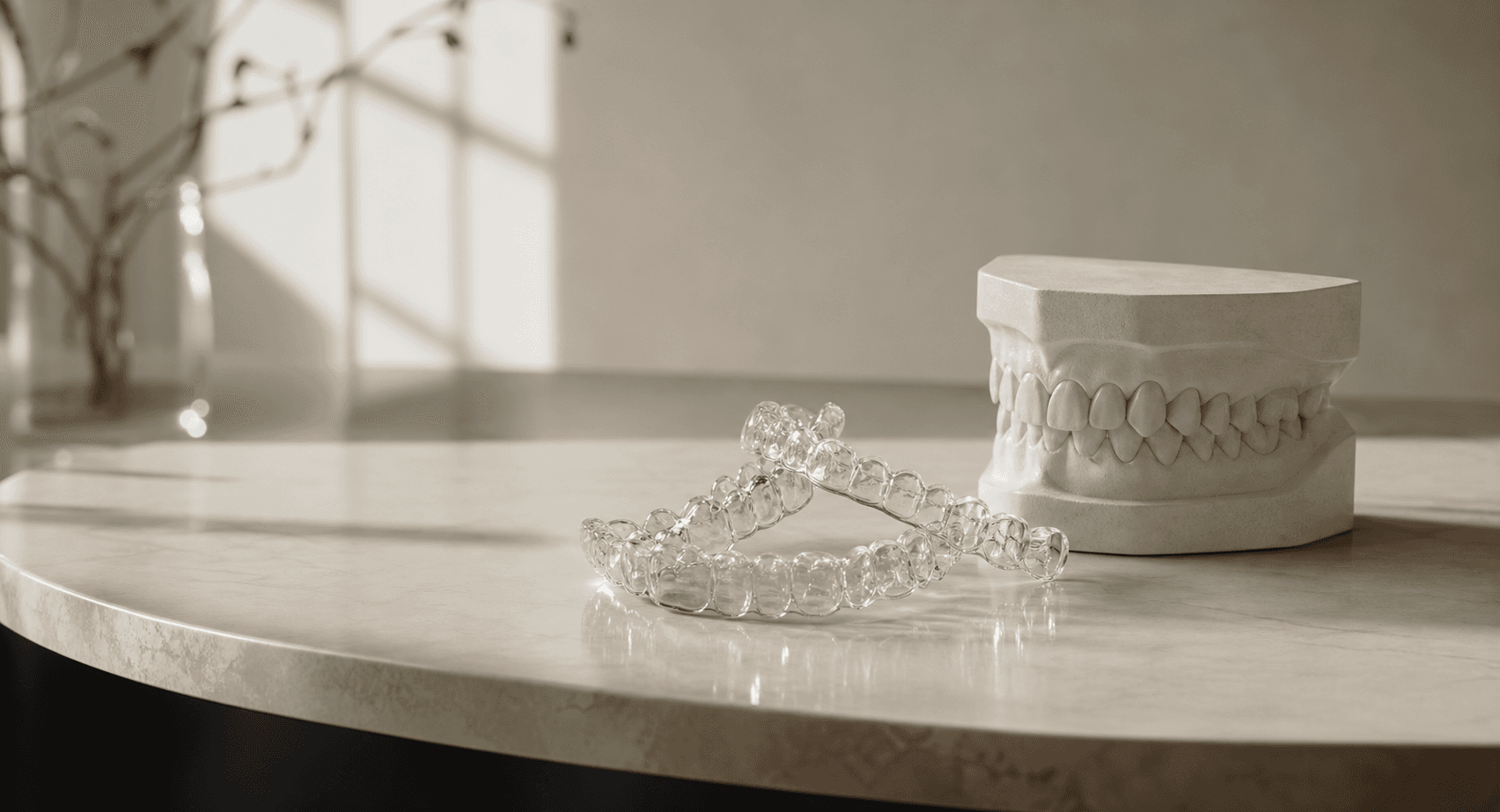
Invisalign
Tooth movement mapped in 3D before you begin — so you see where your smile is headed, not just where it starts.
Learn more
Children's Dentistry
A first dental experience so calm your child asks when they get to come back.
Learn more
Dental Exams & Checkups
Every sound treatment plan begins with an exam done properly — and shown to you, not just filed away.
Learn moreReady to talk about braces?
Brackets and wires remain the workhorse of orthodontics — steady, always-on movement for cases simple and complex alike.