
Modern Implant Dentistry
Dental Implants at Midland and Eglinton
Replacement teeth anchored in bone — planned with modern imaging, placed with care, and built to work for decades.
Of all the ways to replace a missing tooth, an implant is the only one that restores the root as well as the crown. Our Scarborough team at Midland and Eglinton uses detailed imaging to map each case before anything is placed, then walks you through the plan in plain language — including whether an implant is truly your best option, or whether something simpler would serve you better.
New patients welcome — weekday and weekend availability.
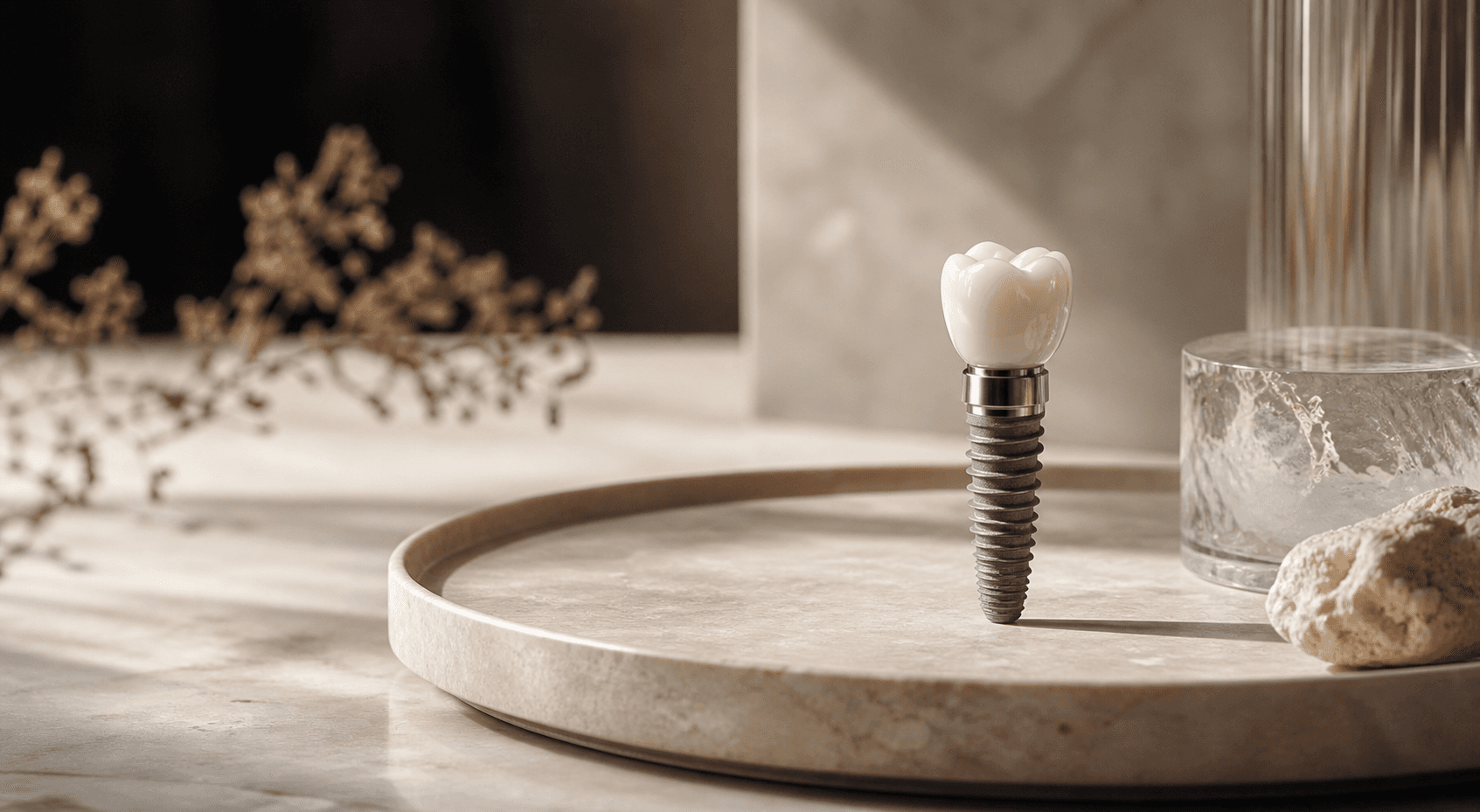
Why implants start below the gumline
Every natural tooth is held by a root, and it is the root — not the visible crown — that keeps your bite stable and your jawbone active. An implant rebuilds that foundation. A biocompatible titanium post is positioned in the jaw, and over the following months the surrounding bone fuses to its surface. Once that bond is solid, the post can carry a single crown, anchor a bridge, or lock a denture firmly in place.
This foundation-first approach explains most of what patients notice about implants: nothing shifts when you chew, no clasps rest on neighbouring teeth, and the bone in the area stays engaged instead of slowly receding. It also explains the timeline. Bone integration cannot be hurried, which is why implant treatment unfolds in stages rather than a single visit.
Our philosophy is simple: technology plans the case, honesty shapes the recommendation. If your bone, health, or budget point toward a bridge or a well-made denture instead, we will say so before you commit to anything.
Your implant journey, stage by stage
Digital assessment
We begin with a thorough exam and the imaging needed to see bone volume, nerve position, and sinus anatomy. This is where the whole case is really decided — precise planning up front is what makes the surgical visit short and predictable.
Site preparation, if needed
When a tooth has been gone for years, the ridge often thins. A grafting procedure can rebuild it before implant placement. Straightforward grafts are handled in-house; for advanced cases we partner with specialists nearby in Scarborough and quarterback your care throughout.
Placement appointment
The post goes in under local anaesthetic in a single, focused visit. Most patients tell us afterward that the anticipation was worse than the appointment, and that recovery felt gentler than having a tooth removed.
Quiet months of integration
For roughly three to six months, bone cells grow onto the implant surface. You will barely notice this stage — a temporary tooth can cover the gap while biology does its work underneath.
Restoration and bite refinement
Once stability is confirmed, we capture a precise impression and seat your final crown, bridge, or denture attachment, adjusting shade and bite until it disappears into your smile.
Have questions about dental implants? Talk to us — our team is happy to walk you through it.
Request AppointmentWho implants genuinely suit
We give candid answers at the consultation rather than optimistic ones over the phone. The factors that matter most for long-term success are:
- Sufficient bone volume at the site, or a site that can be rebuilt with grafting before placement.
- Gum health — any active periodontal infection must be resolved first, since it threatens implants just as it does teeth.
- Healing capacity: smoking and poorly controlled medical conditions can compromise integration, and we discuss this openly.
- Willingness to maintain the implant with daily home care and routine hygiene visits.
- Patience with a staged timeline — a rushed implant is a compromised implant.
The trade-offs, stated plainly
Benefits
- Chewing power and stability that comes closest to a natural tooth of any replacement option.
- Neighbouring healthy teeth stay untouched — no reshaping, no clasps.
- The post keeps the jawbone stimulated, slowing the bone loss that follows tooth loss.
- A two-part design means the visible tooth can be renewed years later without repeating surgery.
Honest limits
- Months of healing are built into the process and cannot responsibly be skipped.
- Grafting, when required, adds appointments and expense to the plan.
- Gum inflammation around an implant is a real risk if home care lapses.
- Some patients simply are not good candidates, and we would rather tell you that than place an implant likely to struggle.
Making sense of coverage for implants
Insurance treatment of implants is famously inconsistent — one plan may contribute toward the crown but not the post, another the reverse, and annual maximums often spread larger cases across benefit years. Rather than leaving you to decode the fine print, our administrative team reviews your plan, submits predeterminations where useful, and files claims on your behalf.
For patients enrolled in the Canadian Dental Care Plan, we can explain how your visit is likely to work and what tends to fall inside or outside the program, though coverage decisions rest with the federal plan rather than with our office. Either way, you receive a written treatment estimate before anything begins, so the numbers are never a surprise.
Understanding what shapes implant fees
Implant treatment is quoted case by case, because two patients replacing the same tooth can need very different plans. The main variables are the scope of the case, the condition of the site, and the restoration that finishes it.
- Whether you are replacing one tooth, several, or a complete arch.
- Site preparation — extractions or bone grafting before placement.
- The design and material of the final crown, bridge, or denture connection.
- Diagnostic imaging and the planning work behind safe placement.
Viewed over a decade or more, an implant often proves economical: it spares neighbouring teeth from being cut down and rarely needs replacing the way bridges and dentures can. After your exam you receive an itemized written quote, and our team helps you apply any insurance or CDCP benefits you hold before treatment starts.
Learn more about using your dental insurance or the Canadian Dental Care Plan.
Frequently asked questions
Related treatments
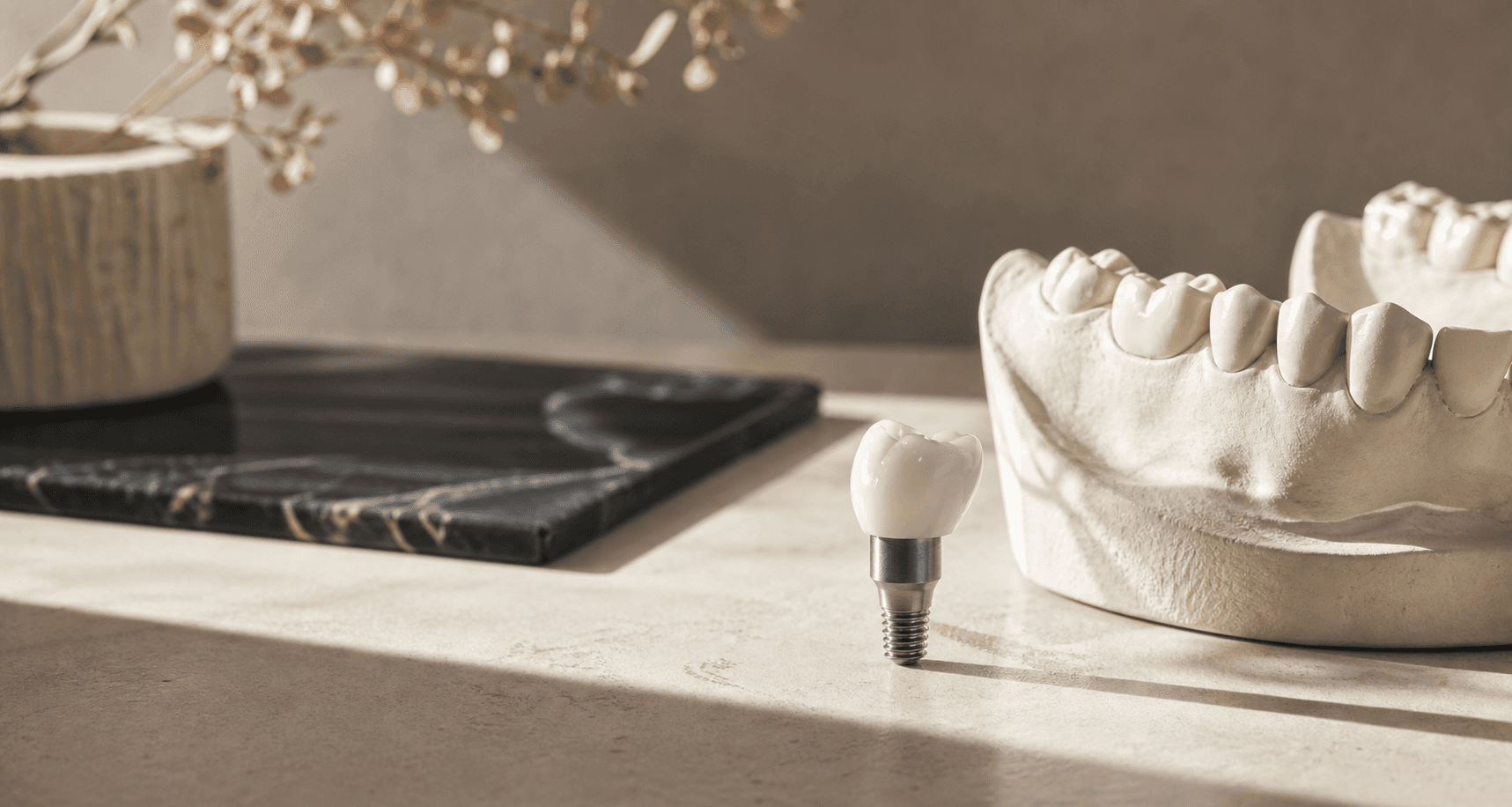
Implant Crowns
Your implant did the structural work — the crown is where it becomes a tooth again.
Learn more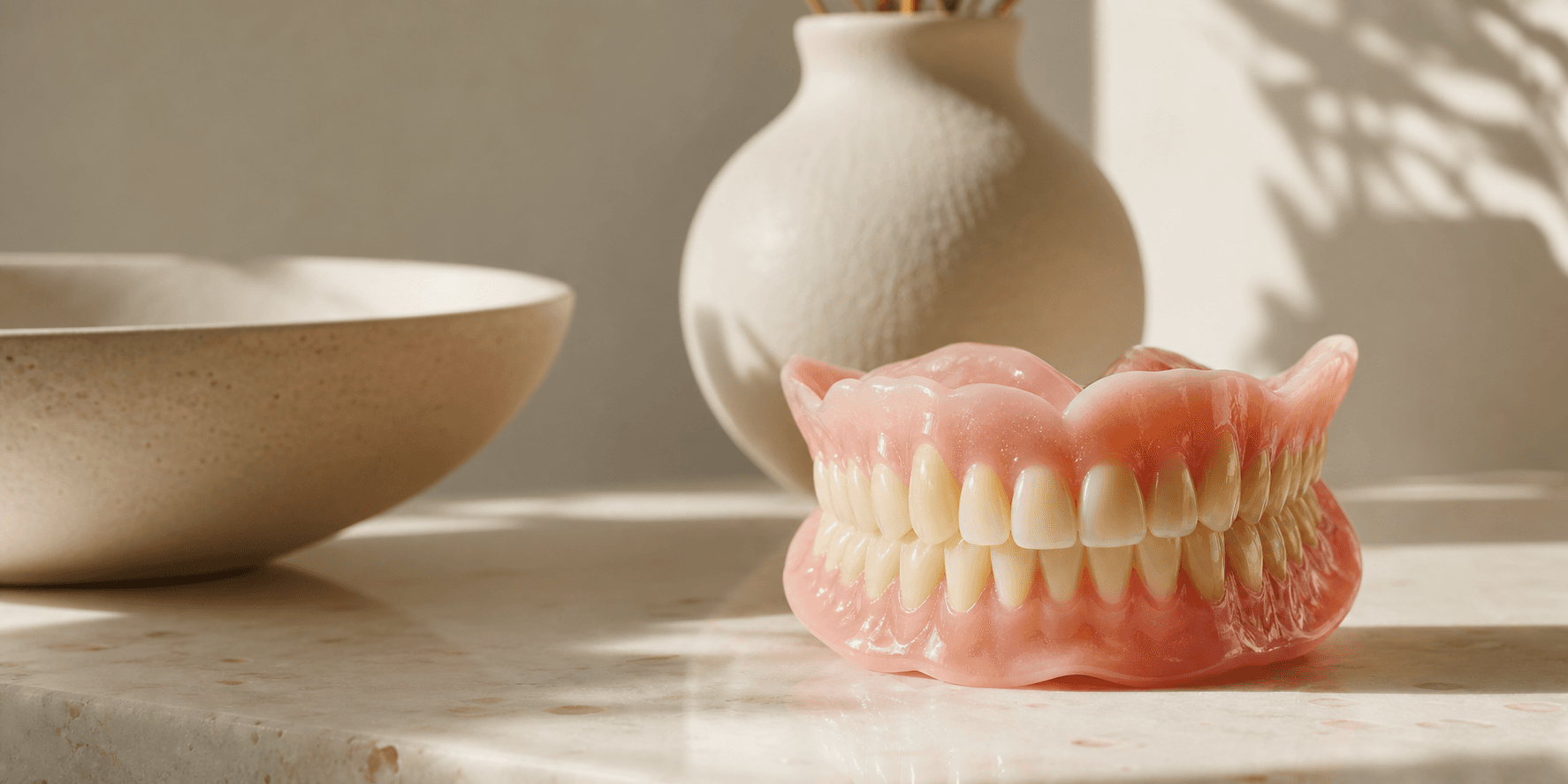
Dentures
Dentures designed around your face and refined until they genuinely work — not handed over and forgotten.
Learn more
Tooth Extractions
Removing a tooth is never our first idea — but when it is genuinely the right one, we make the experience calm and the recovery well-planned.
Learn moreReady to talk about dental implants?
Replacement teeth anchored in bone — planned with modern imaging, placed with care, and built to work for decades.