
Straighter, Quietly
Invisalign Clear Aligners in Scarborough
Tooth movement mapped in 3D before you begin — so you see where your smile is headed, not just where it starts.
Invisalign straightens teeth with a sequence of clear, removable trays, each one nudging your teeth a fraction further along a digitally planned path. At Midland Dental Center, our practice at Midland and Eglinton starts every case with a comfortable digital scan rather than a tray of impression putty, plans the movement on a 3D model, and tells you candidly whether aligners — or something else — will actually get your bite where you want it.
New patients welcome — weekday and weekend availability.
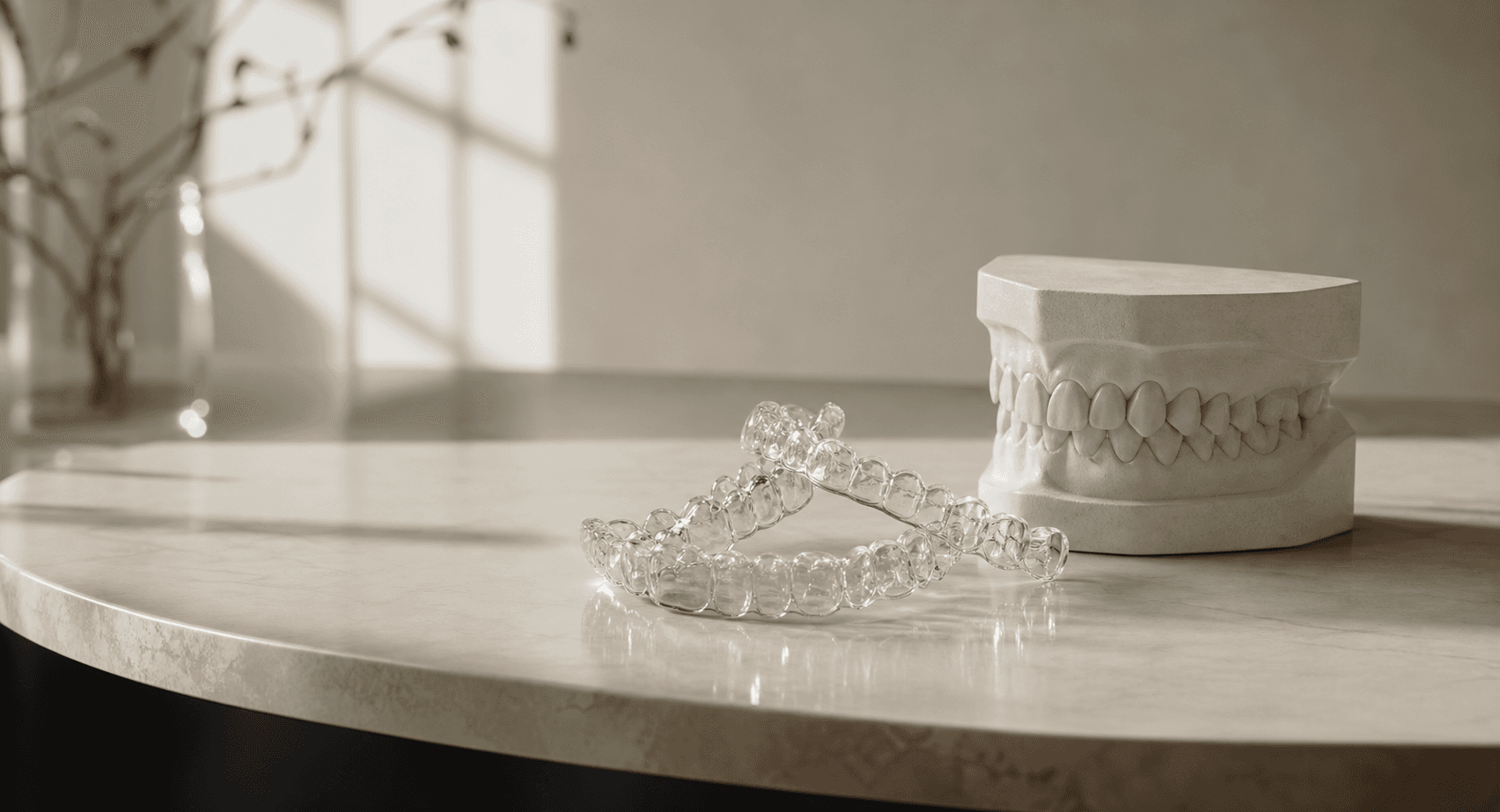
Planned on screen before it happens in your mouth
The technology is what separates modern aligner treatment from guesswork. A digital scanner captures your teeth in minutes — no gagging on impression material — and the resulting 3D model becomes the blueprint for your entire case. Software plots how each tooth will travel, stage by stage, and in most cases we can show you a projection of the likely end result before you have committed to anything. Few dental treatments let you inspect the destination first; this one does.
Each printed tray in your series is a snapshot of one stage along that path. Worn in order, usually for a week or two apiece, the trays apply light, persistent pressure that walks your teeth toward their planned positions. Because the trays are removable, meals, brushing, and flossing carry on exactly as before — a practical difference from fixed braces that matters more with every month of treatment.
That removability is also the honest catch. An aligner in its case moves nothing. The plan on the screen only becomes the smile in the mirror if the trays are actually worn for the recommended hours, day after day. And some bites — significant rotations, certain jaw relationships — remain better served by fixed braces. We assess that openly at your consultation, because a beautiful projection means little if the mechanics are wrong for your case.
Is your bite an aligner case?
Two questions decide it: what your teeth need, and how you will live with the trays. We weigh both at the consultation.
- Crowding, spacing, or mild-to-moderate rotation — the movements aligners handle predictably well.
- The self-discipline to keep trays in around the clock, out only for meals and brushing.
- A healthy baseline: decay and gum problems are resolved before any tooth movement begins.
- A preference for discretion — work meetings, photos, and social life without visible hardware.
- A bite that suits the mechanics; where fixed braces would genuinely do better, you will hear it from us straight.
Have questions about invisalign? Talk to us — our team is happy to walk you through it.
Request AppointmentThe road from scan to retainer
Digital scan and honest assessment
We examine your teeth, gums, and bite, then capture a full digital scan. From this we determine whether aligners can deliver your goal — and say so plainly if another route would serve you better.
Reviewing your projected result
The 3D plan maps every stage of movement, and we walk you through the projected outcome and estimated timeline together. You commit to treatment after seeing the plan, not before.
Fitting and attachments
Your first trays are fitted and checked for seat. Where the plan calls for it, small tooth-coloured attachments are bonded to particular teeth, giving the plastic the grip it needs for rotations and trickier movements.
Progress visits
You change trays on schedule at home and visit us periodically so we can confirm your teeth are tracking the plan. Appointments are short, and flexible scheduling keeps them easy to fit around work or school.
Refinement, then retention
If a few teeth need extra persuasion at the end, a short refinement series finishes the job. Then a retainer takes over — the quiet guardian of everything the trays achieved.
The daily reality of aligner life
Most patients find the adjustment period short. New trays feel snug for the first day or two — that pressure is the plan working — and speech typically normalizes within days as your tongue adapts. The routine becomes automatic: trays out for meals, teeth brushed before they go back in, case in your bag whenever the trays are not in your mouth. That last habit matters more than it sounds; a napkin-wrapped aligner on a restaurant tray is the classic way one gets lost.
Care is simple and worth doing properly. Rinse the trays when they come out, brush them gently with a soft brush, and keep hot drinks away from them — heat can distort the fit that the whole plan depends on. Only water while trays are in; anything sugary pools between plastic and enamel, which is exactly where you do not want it.
The patients who finish on schedule share one habit: the trays go back in after every meal, every time. Wear hours are the currency of aligner treatment, and no amount of technology substitutes for them. When the last tray comes out, many patients mark the finish with professional whitening — a satisfying final flourish we are happy to plan into the timeline from the start.
What determines your Invisalign fee
Aligner fees follow the scale of the movement: how far your teeth travel, how many trays that takes, and how long we guide the journey.
- Case complexity — a short cosmetic alignment of the front teeth versus comprehensive movement of both arches.
- The number of trays and estimated months your plan requires.
- Whether refinement trays are likely to be part of finishing well.
- Retainers at the end, which protect the result for the long term.
Limited cases naturally cost less than comprehensive ones, and you will know which yours is after the scan, not after the bill. Orthodontic coverage exists in many dental plans, usually with a lifetime maximum, and our team helps you check both your plan and any Canadian Dental Care Plan eligibility. A written quote follows your consultation before anything is booked.
Learn more about using your dental insurance or the Canadian Dental Care Plan.
Insurance, CDCP, and planning ahead
Many private dental plans contribute toward orthodontic treatment, though the details vary widely — lifetime maximums are common, and adult coverage sometimes differs from coverage for children and teens. Bring your plan details to the consultation and our front desk will help you decode what it may actually pay toward aligners.
For patients exploring the Canadian Dental Care Plan, we can discuss what may apply to your circumstances without overpromising, since eligibility rules sit outside our control. What we can guarantee is clarity on our side: a complete written estimate before treatment starts, so the financial picture is settled before the first tray is ever fitted.
Frequently asked questions
Related treatments

Teeth Whitening
Whitening planned by a dentist, matched to your enamel, and paced so sensitivity never runs the show.
Learn more
Smile Makeover
Every change you want, mapped as one plan — sequenced properly, previewed honestly, paced to suit you.
Learn more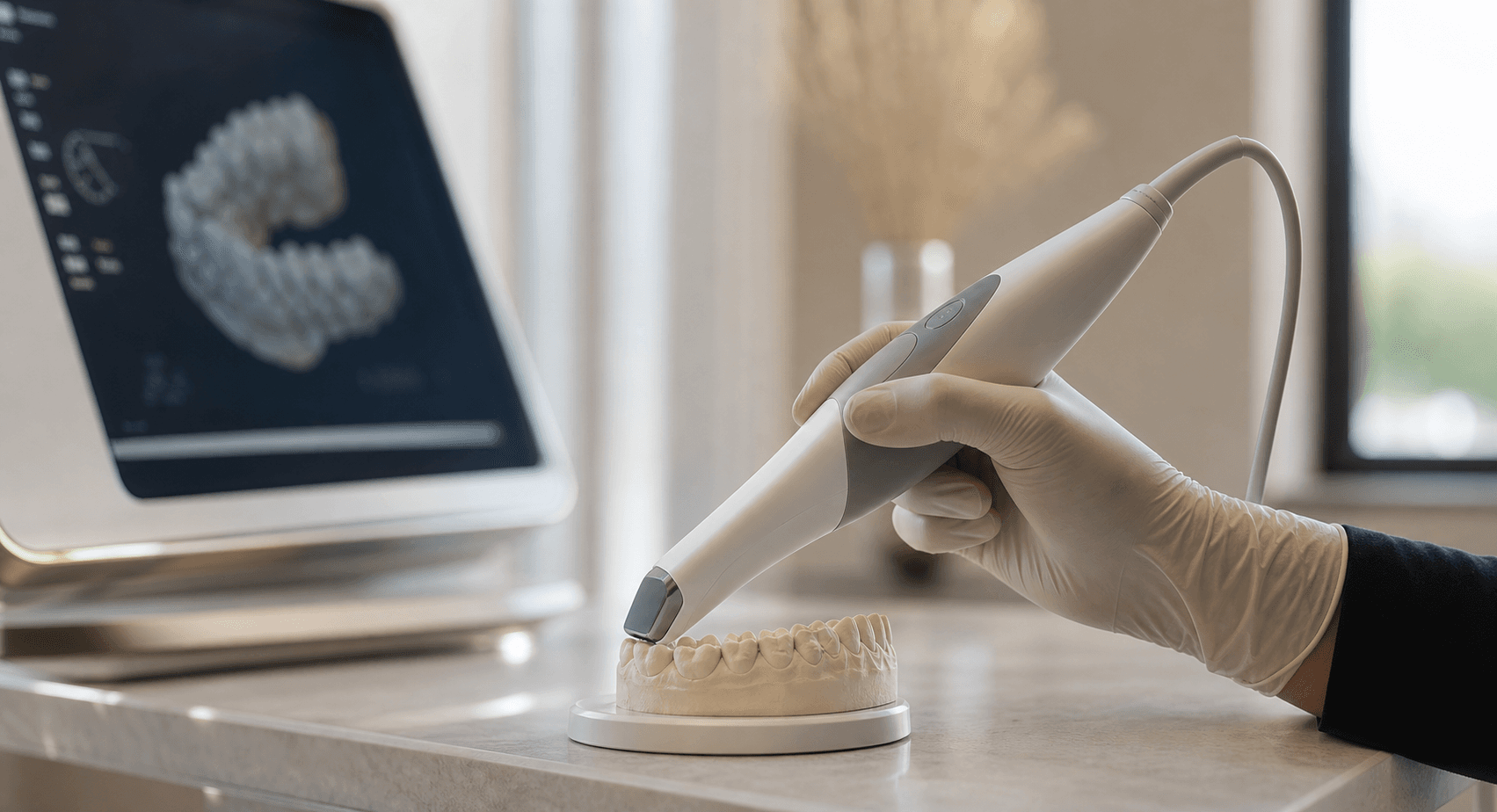
Dental Exams & Checkups
Every sound treatment plan begins with an exam done properly — and shown to you, not just filed away.
Learn moreReady to talk about invisalign?
Tooth movement mapped in 3D before you begin — so you see where your smile is headed, not just where it starts.