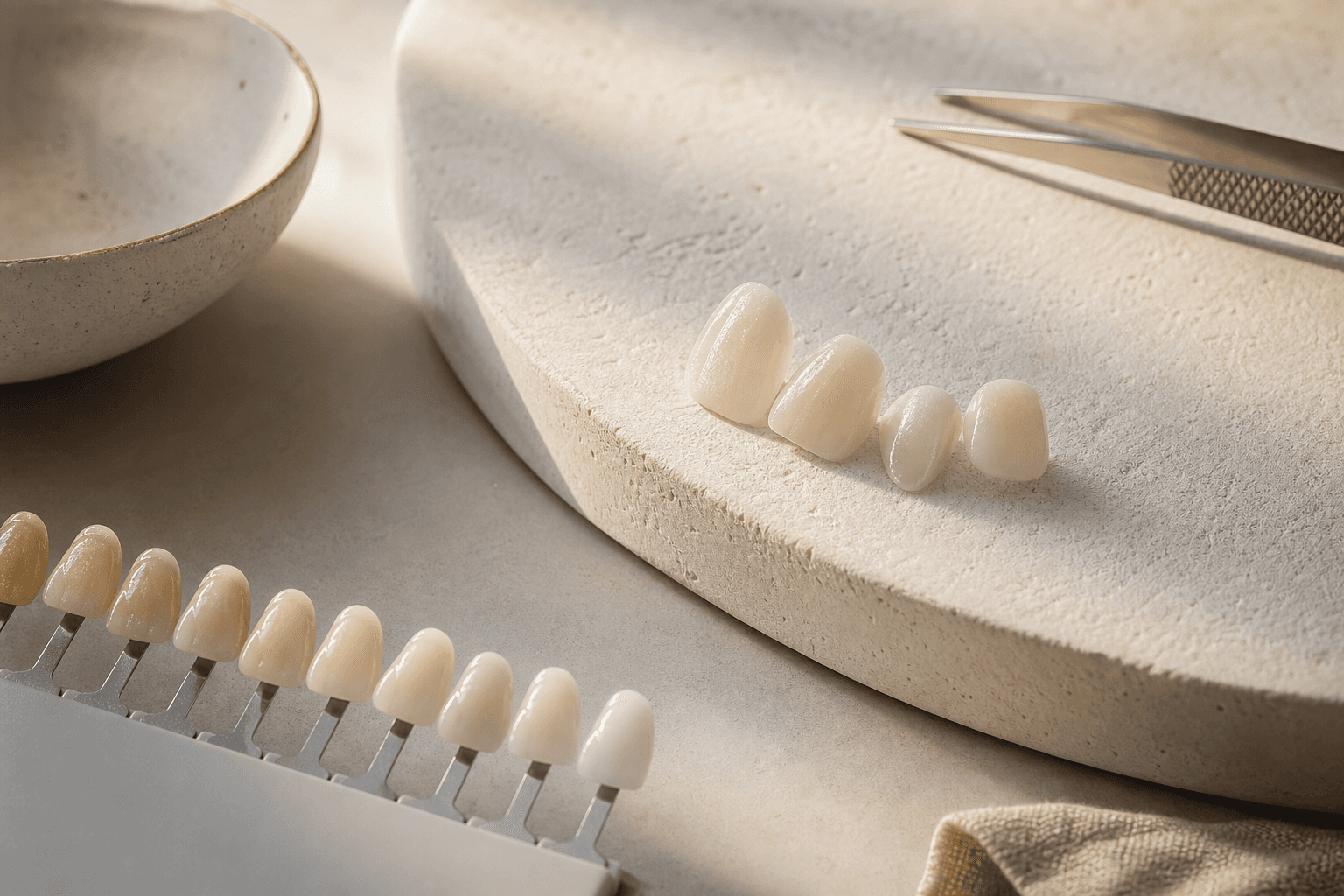

A chipped front tooth, a gap you have always noticed in photos, a couple of teeth that stayed stubbornly darker than the rest — the problems that bring people to cosmetic dentistry are usually small, specific, and long-tolerated. What surprises many patients is that most of these problems have two quite different solutions: composite bonding and porcelain veneers.
The two treatments can produce similar-looking results on the day they are finished, which is exactly why the choice deserves a careful conversation. They differ in how they are made, how long they last, how they age, how much natural tooth they ask for, and how committed you are once you start. Here is an honest walkthrough of both, and the situations where each one genuinely shines.
Composite bonding: sculpted in a single visit
Bonding uses the same tooth-coloured composite resin that modern fillings are made of, applied in thin layers directly onto the front of the tooth, then shaped, hardened with a curing light, and polished. The entire process is done freehand by your dentist in one appointment, usually without any anesthetic, because in most cosmetic cases little or no enamel needs to be removed.
That last point is bonding's quiet superpower: it is largely additive. The resin sits on top of your natural tooth, which means the treatment is close to reversible and keeps every future option open. For a young patient with a chipped incisor, or anyone dipping a toe into cosmetic work for the first time, starting with the least invasive option is simply good sequencing.
Bonding is at its best for small, localized fixes — a chipped corner, a slightly short tooth, closing a modest gap, masking a single discoloured spot, or reshaping an edge. Skilled layering of different resin shades can make a repair genuinely disappear into the surrounding tooth.
Where bonding shows its limits
Composite is a plastic-based material, and it ages like one. It picks up stain from coffee, tea, red wine, and smoking faster than natural enamel does, and unlike enamel it cannot be whitened — only polished or replaced. Its surface lustre also dulls gradually, so bonding on prominent front teeth often needs re-polishing every year or two and replacement after some years of service.
Strength is the other constraint. Composite is durable for normal use but more prone to chipping than porcelain, especially on biting edges and in mouths that grind. A bonded edge that chips is easy and quick to repair, which is part of bonding's charm, but a patient who wants to stop thinking about the repair entirely may find the maintenance cycle tiresome.
Finally, bonding struggles with big transformations. Covering many teeth, dramatically changing colour across a whole smile, or correcting more significant shape and alignment issues pushes composite past what it does gracefully. That is roughly the point on the map where veneers take over.
Porcelain veneers: custom shells built to last
A veneer is a thin shell of porcelain, custom-crafted in a dental lab to a precise design, then bonded permanently to the front surface of the tooth. Where bonding is sculpted by hand at the chair, a veneer is engineered: shade, translucency, surface texture, and shape are all planned in advance, which is why porcelain is the standard for full smile makeovers.
Porcelain's material advantages are real. It resists stain far better than composite, keeps its glassy lustre for years, mimics the way natural enamel plays with light, and handles biting forces on front teeth more robustly. A well-made set of veneers, cared for properly, typically outlasts bonding by a comfortable margin.
The process takes more than one visit: a planning appointment with digital scans or impressions, preparation of the teeth, a set of temporaries while the lab crafts the final shells, and a fitting appointment where each veneer is checked and bonded. At our clinic near Midland and Eglinton we plan cases digitally, which lets you preview the intended result before any tooth is touched — an underrated moment for making sure your expectations and the design actually match.
The honest cost of veneers: enamel and commitment
Traditional veneers require removing a thin layer of enamel so the finished tooth is not bulky. That enamel does not grow back, which makes veneers a permanent commitment: the tooth will always need a veneer or similar covering from that point on. Minimal-prep and no-prep techniques exist for suitable cases, but candidacy for those depends on your bite and the position of your teeth, so it is a case-by-case conversation rather than a promise.
Veneers also carry a higher investment of time and cost than bonding, involve the precision of a lab, and are less trivially repairable — a fractured veneer is generally replaced rather than patched. None of this makes them the wrong choice; it makes them a deliberate one. The patients happiest with veneers are the ones who understood the commitment going in.
One more honest note: veneers are not a substitute for orthodontics when the underlying issue is significant crowding or bite misalignment, and they need healthy gums and sound teeth underneath. Whitening, alignment, and gum health are often sequenced before cosmetic work so the final result sits on a stable foundation.
Choosing between them: a practical framework
Start with the size of the change. One or two teeth with small chips, minor gaps, or isolated discolouration lean strongly toward bonding — fast, gentle, affordable relative to lab-made work, and reversible enough to leave every future door open. A whole-smile change in colour and shape across multiple front teeth leans toward veneers, where porcelain's durability and stain resistance repay the bigger commitment.
Then weigh your habits honestly. Heavy coffee and red wine drinkers will notice composite staining sooner. Grinders and clenchers put both options at risk and usually need a night guard protecting whichever they choose. Patients who want minimal upkeep favour porcelain; patients who want minimal commitment favour composite.
The good news is that this is rarely a decision you have to make alone or all at once. A cosmetic consultation with photos and scans can model both paths, and some patients sensibly start with bonding, live with the improved shape for a few years, and graduate to veneers later with a much clearer idea of what they want. There is no prize for choosing the bigger treatment sooner than you need it.