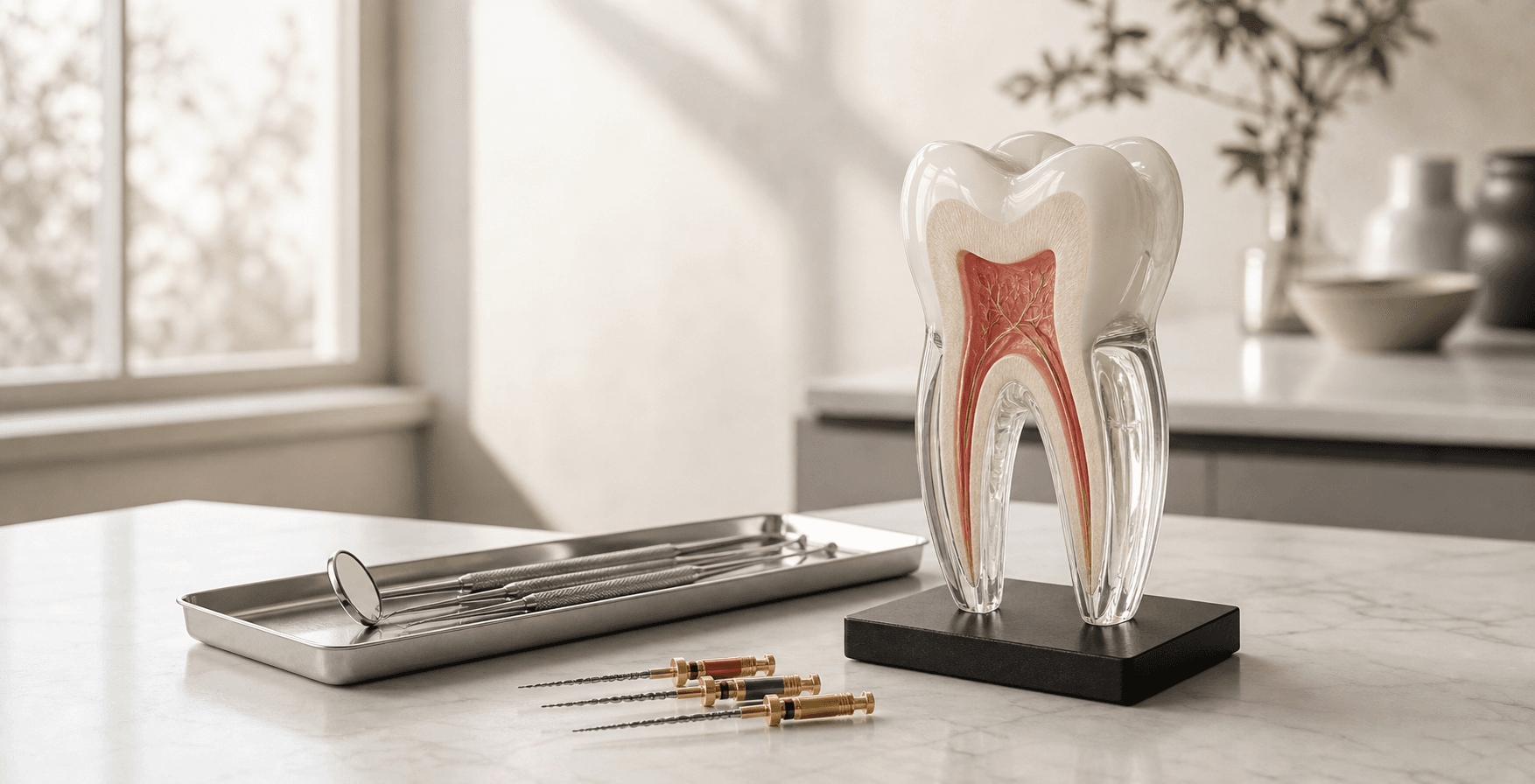
The hardest part of a root canal is usually the toothache that sends you in for one. By the time the treatment is done, the inflamed nerve that caused all that pain is gone, and most people are surprised by how ordinary the recovery feels. Still, the hours and days right after raise a predictable set of questions — what can I eat, when, and is this ache I am feeling normal?
This is a practical guide to the first stretch after treatment: how to handle the numbness, what to eat and avoid, whether you can drive home or reach for a cigarette, and why the temporary filling you leave with is only half the job. We will also take a moment to put an old myth to rest, because plenty of people arrive genuinely worried that a root canal is somehow bad for them.
None of this replaces the specific instructions your dentist gives you for your tooth. Consider it the reassuring context around those instructions — what to expect, what is routine, and the handful of signs that mean you should pick up the phone.
First, let the numbness wear off
You will leave with part of your mouth still frozen from the local anesthetic, and it typically takes a couple of hours to fade. The single most useful rule for that window is simple: do not chew on that side until full feeling returns. A numb cheek, lip, or tongue cannot tell you it is being bitten, and it is genuinely easy to injure soft tissue without realizing until the freezing wears off and it is sore.
If you want or need to eat before the numbness passes, keep to something soft and cool that requires little chewing and stick to the other side of your mouth. Warm and hot foods are worth avoiding until sensation is back, again because you cannot reliably judge temperature on a frozen lip or tongue. Once feeling returns fully, you can eat more normally, with a few sensible adjustments covered below.
Eating after a root canal: soft, and on the other side
Yes, you can eat after a root canal — the timing and choices are what matter. For the first day or two, favour soft foods that do not demand hard biting: things like yogurt, eggs, pasta, soup that is not too hot, mashed potatoes, smoothies, and well-cooked vegetables. Chew on the opposite side from the treated tooth whenever you can, which keeps pressure off it while it settles.
What not to eat is mostly common sense once you know why. Hard and crunchy foods — nuts, ice, crusty bread, raw carrots — can stress a tooth that is temporarily more fragile before its permanent restoration, and very chewy or sticky foods can tug at a temporary filling. Extremely hot or cold items may bother the area for a few days. None of this is forever; it is a short list of precautions for a short window while the tooth and the tissue around it calm down.
A treated tooth is more brittle than a healthy one until it is properly restored, which is the practical reason to be gentle with it in the meantime rather than testing what it can handle.
What counts as normal recovery
Some tenderness for a few days is entirely expected, especially when you bite down. The nerve inside the tooth is gone, but the ligament and tissue around the root were inflamed before treatment and were worked near during it, so mild soreness while they settle is routine. Over-the-counter pain relief, used as directed, manages this comfortably for most people, and the tenderness generally eases day by day rather than worsening.
Keep up your normal oral hygiene through all of this. You can and should brush and floss gently, including around the treated tooth, from the same day — a clean mouth heals better. Just be a little careful near a temporary filling so you do not dislodge it. If your dentist gave you specific aftercare notes, those take priority over any general advice, because they are written for your particular tooth.
Driving, smoking, and other everyday questions
Driving is usually not a problem. A root canal done under local anesthetic alone leaves you fully alert — the freezing affects your mouth, not your ability to drive — so most people head home or back to work on their own without issue. The exception is if you had sedation of any kind; sedatives impair reaction time and judgement, so you must arrange for someone to drive you, and you should not drive until the next day or as instructed.
Smoking is best avoided, and not just as a general health nudge. Tobacco smoke reduces blood flow and oxygen to healing tissue, which can slow recovery and raise the chance of complications right when the area is trying to settle. If you smoke, holding off for as long as you can after treatment genuinely helps the tooth heal, and it is worth being honest with your dentist about it so your aftercare fits your real habits.
Alcohol is worth skipping while any tenderness lasts or while you are taking pain medication, and vigorous rinsing or poking at the tooth with your tongue is best resisted so the temporary filling stays put.
Why the crown matters more than people think
Most root canals finish with a temporary filling, not the final restoration. That temporary seal does an important job in the short term, but it is not built to last — it can wear or leak over time, letting bacteria back toward the freshly cleaned canals. Coming back for the permanent restoration, which for most back teeth means a crown, is what truly protects the tooth for the long run.
A crown matters because a tooth that has had a root canal is more brittle and prone to fracture, especially the molars that do the heavy chewing. The crown caps the tooth, distributes biting force, and seals it properly, giving a well-treated tooth every chance of lasting for many years. Skipping or delaying it is one of the most common reasons a successful root canal is later lost — so treat the crown appointment as the real finish line, not an optional extra.
The myth: are root canals bad for you?
You may have seen claims online that root canals are somehow harmful or cause disease elsewhere in the body. This idea traces back to poorly designed research from about a century ago that has since been thoroughly discredited. There is no sound scientific evidence that a properly performed root canal causes illness. What a root canal does is remove infected tissue and eliminate a genuine source of infection — the opposite of leaving a problem to fester.
The realistic comparison is not root canal versus a perfect tooth; it is root canal versus losing the tooth. Saving your natural tooth preserves your bite, your bone, and your ability to chew normally, and modern treatment is done comfortably under anesthetic. If anxiety about the procedure or things you have read online is holding you back, that is worth raising with us directly, so a real answer can replace a scary headline.