Losing a tooth — or facing the loss of several — puts you in front of one of dentistry's biggest decisions. The two main roads are dental implants, which anchor replacement teeth into the jawbone itself, and dentures, which rest on the gums and can be taken out. Both have been improved dramatically by modern materials and digital planning, and both have passionate advocates.
The honest truth is that neither option is universally better. They differ in how they feel, how they function, what they ask of your jawbone, your health, your daily routine, and your patience with treatment timelines. What follows is the comparison we wish every patient had before their consultation — not to make the decision for you, but so the conversation in the chair starts from an informed place.
How each option actually works
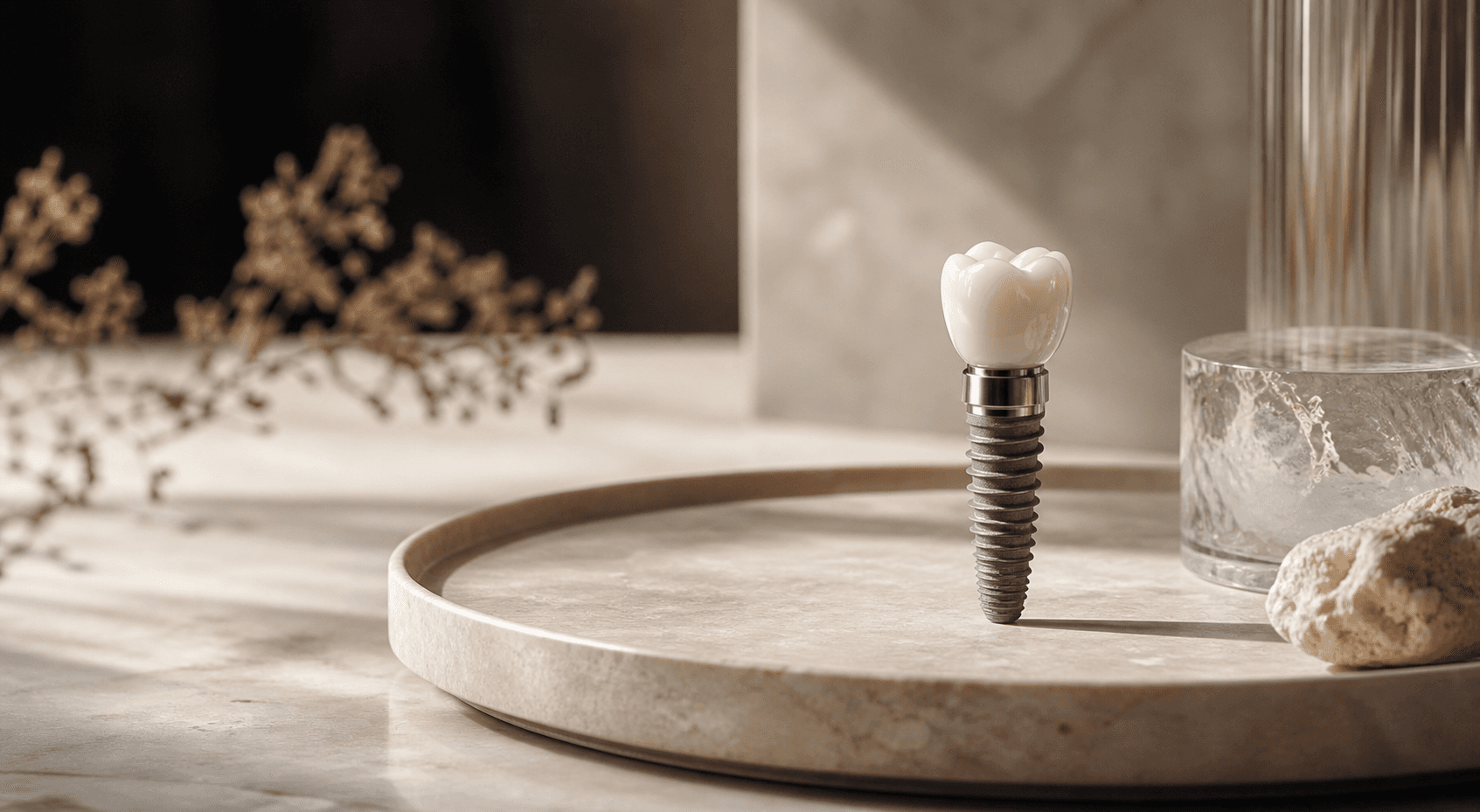
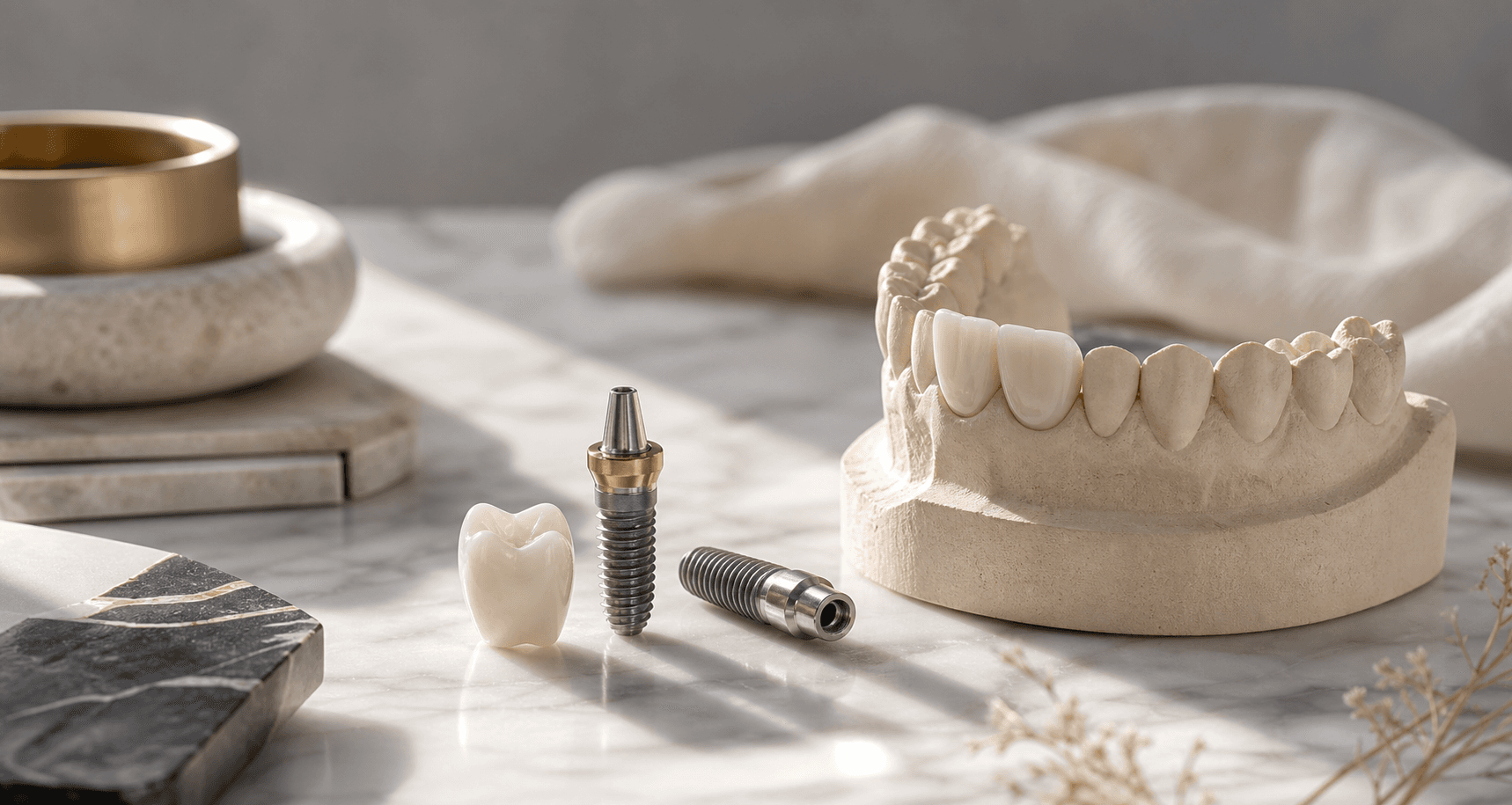
A dental implant is a small titanium post placed into the jawbone, where bone grows onto its surface over a few months in a process called osseointegration. Once integrated, the post works like an artificial tooth root: a crown attaches to a single implant, a bridge can span several, and a small number of implants can anchor a full arch of fixed teeth. Because the implant is fused to bone, biting force travels the same path it did with a natural tooth.
Dentures take the opposite approach: rather than anchoring into bone, they rest on it. A complete denture covers the gums (and, on top, the palate) and stays in place through suction, fit, and the muscles of your cheeks and tongue. A partial denture replaces some teeth while clasping onto the natural teeth that remain. Dentures are removable by design — they come out for cleaning and typically for sleeping.
There is also a widely used middle path: implant-supported overdentures, where a removable denture clips onto a few strategically placed implants. The denture gains dramatic stability — particularly on the lower jaw, where conventional dentures struggle most — while remaining removable and less involved than a full arch of fixed teeth.
Function and daily life: the differences you feel
Chewing power is where the gap is widest. Implant-supported teeth restore something close to natural biting force, which means steak, apples, crusty bread, and corn on the cob stay on the menu without strategy. Conventional full dentures transmit force through the gums, which were never designed for the job; most denture wearers adapt their diet and technique, and the learning curve for eating and speaking is real, especially with a lower denture that floats more than it grips.
Daily maintenance flips the comparison in an interesting way. Implants are cleaned like natural teeth — brushing, flossing or interdental brushes, and regular hygiene visits, with meticulous gumline care because implants can develop their own version of gum disease. Dentures come out for cleaning with a brush and soaks, and the gums beneath need rest and cleaning too. Neither is 'maintenance-free'; they are simply different routines, and your honest preference between them is a legitimate factor in the decision.
There are also quieter quality-of-life differences. Implant-fixed teeth do not move when you laugh or sneeze, need no adhesives, and do not cover the palate — which matters for taste and food temperature. Dentures, for their part, can rebuild lost lip and cheek support more easily in patients who have been missing teeth for years, and they can be adjusted or remade as the mouth changes.
The bone question nobody explains properly
Jawbone behaves like muscle in one important respect: it stays robust only when it is used. Natural tooth roots deliver chewing stimulation into the bone with every meal. When teeth are lost, that stimulation stops, and the body gradually resorbs the unused bone — the jaw ridge shrinks in height and width, year over year. This is why long-time denture wearers periodically need relines and remakes, and why the lower face can take on a sunken appearance after decades without teeth.
Implants are the only replacement option that interrupts this process. Because they transmit chewing force into the bone the way roots did, the bone around them stays stimulated and largely stable. This is the strongest long-term argument for implants, and it is also why timing matters: bone that has already resorbed cannot always support an implant without grafting procedures to rebuild it first.
Practically, this means the implant conversation is easiest soon after tooth loss, while the bone is still generous. It does not mean the door closes — grafting and careful 3D planning extend candidacy to many patients with significant bone loss — but earlier is simpler. Modern cone-beam imaging lets your dentist measure your available bone precisely and show you the situation on screen rather than asking you to take it on faith.
Timelines, candidacy, and honest trade-offs
Dentures are the faster road: impressions or digital scans, fittings, and delivery typically span weeks. Implants run on biology's schedule — after placement, the bone needs a few months to integrate before final teeth are attached, and any grafting adds time in front of that. Some situations allow a temporary tooth on the implant the same day, but the full journey from consultation to final restoration is commonly several months. Patients who choose implants almost never regret the wait afterward, but it is a real wait and you should plan for it.
Candidacy runs deeper than bone. Implants ask for reasonable overall health and healing capacity: uncontrolled diabetes, heavy smoking, certain medications, and untreated gum disease all raise failure risk and need to be addressed honestly in planning. Dentures have almost no medical barriers to entry, which is part of why they remain the workhorse solution worldwide. Age by itself, contrary to a common assumption, rules out neither option.
On cost, the honest framing is total cost over time, not sticker price. Dentures are the more modest initial investment but recur — relines, adjustments, and periodic remakes as the jaw changes. Implants front-load the investment and then, with good care, tend toward long stretches of stability. Which pattern suits you depends on your finances, your age, your priorities, and how much the daily-life differences above matter to you. A good treatment plan puts real numbers to both roads for your specific mouth, and many patients phase treatment over time to make the preferred road workable.
How to actually decide
Start with how many teeth are missing and where. A single missing tooth is implant territory in most healthy mouths, since the alternative — a bridge — requires grinding down two healthy neighbours. Several missing teeth scattered around an arch make the comparison genuinely competitive between partials and implant bridges. A full arch opens the widest menu: conventional dentures, implant-retained overdentures, or fixed full-arch implant teeth, in ascending order of stability and investment.
Then get specific with a consultation that includes proper imaging. The variables that actually drive the recommendation — bone volume, gum health, bite forces, your health history, your budget, your tolerance for treatment time — cannot be assessed from an article, only confirmed in person. At our clinic near Midland and Eglinton, we plan replacement cases with 3D imaging and walk through every viable option side by side, including the ones we would not choose for you, and we will tell you why.
Finally, give real weight to the middle path. For lower-jaw full arches especially, an overdenture clipped onto a small number of implants delivers a disproportionate jump in stability and confidence over a conventional denture, at a fraction of the complexity of full fixed teeth. For many patients it is the sweet spot — and it can often be built in stages, starting with a well-made denture and adding implants when ready.