Straightening teeth without a mouth full of metal has an obvious appeal, and Invisalign has become the name most people reach for when they picture it. The pitch is simple enough — clear, removable trays that quietly nudge your teeth into place — but the way it actually works, and how long it takes, tends to be fuzzier. Plenty of people in Scarborough start looking into it with a mix of curiosity and a healthy dose of skepticism.
That skepticism is fair, because Invisalign asks something of you that braces do not: the discipline to wear it. The technology is genuinely clever, but the results lean heavily on how you use it. Understanding both halves — the science of how the aligners move teeth and the honest reality of the commitment — is the best way to decide whether it fits your life.
This guide explains what the aligners are, how the treatment is planned and previewed, how your teeth actually move, and the timelines you can realistically expect. It also covers the parts people forget to ask about: attachments, refinements, and the retainers that come afterward.
What Invisalign aligners actually are
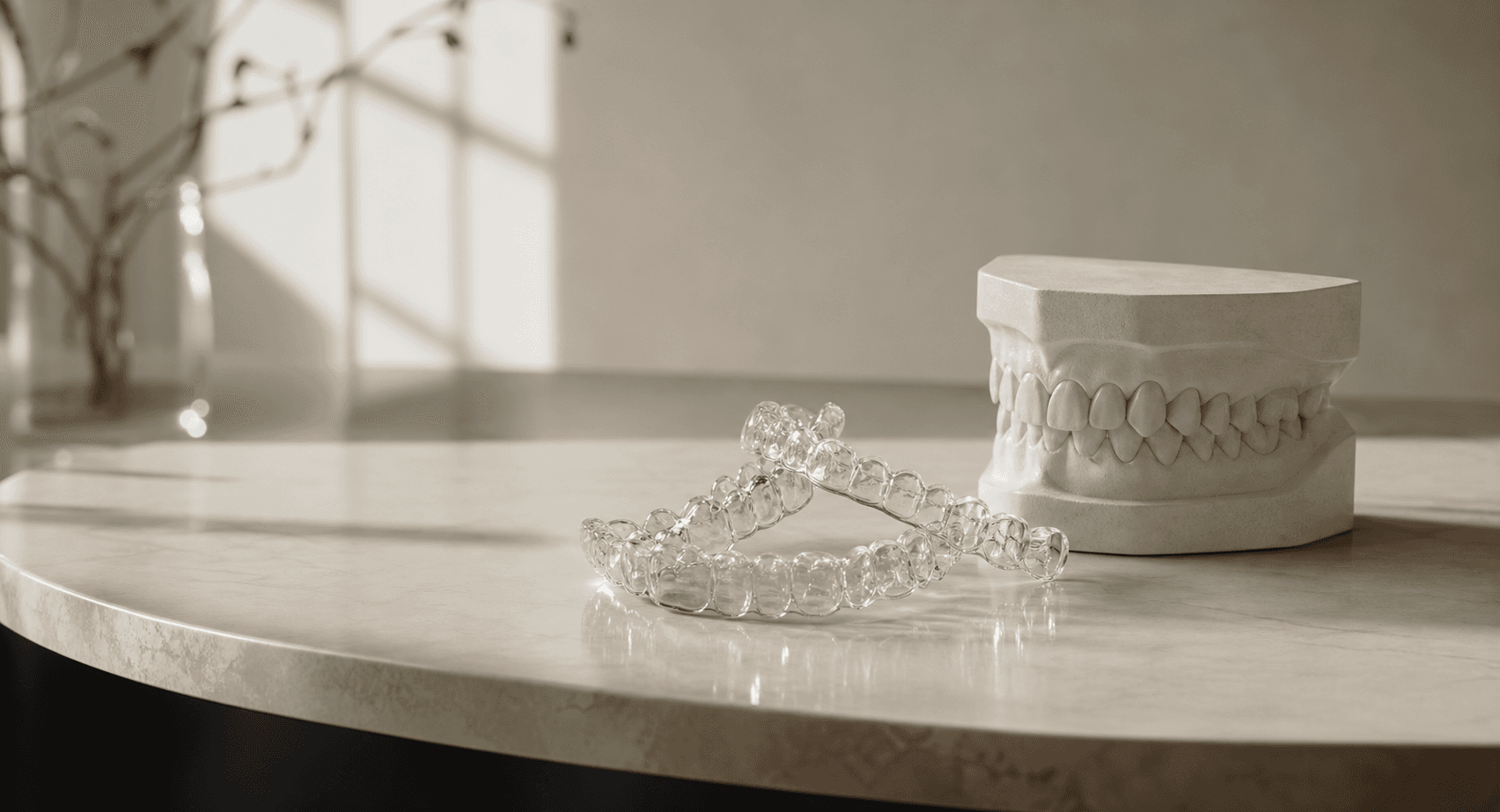
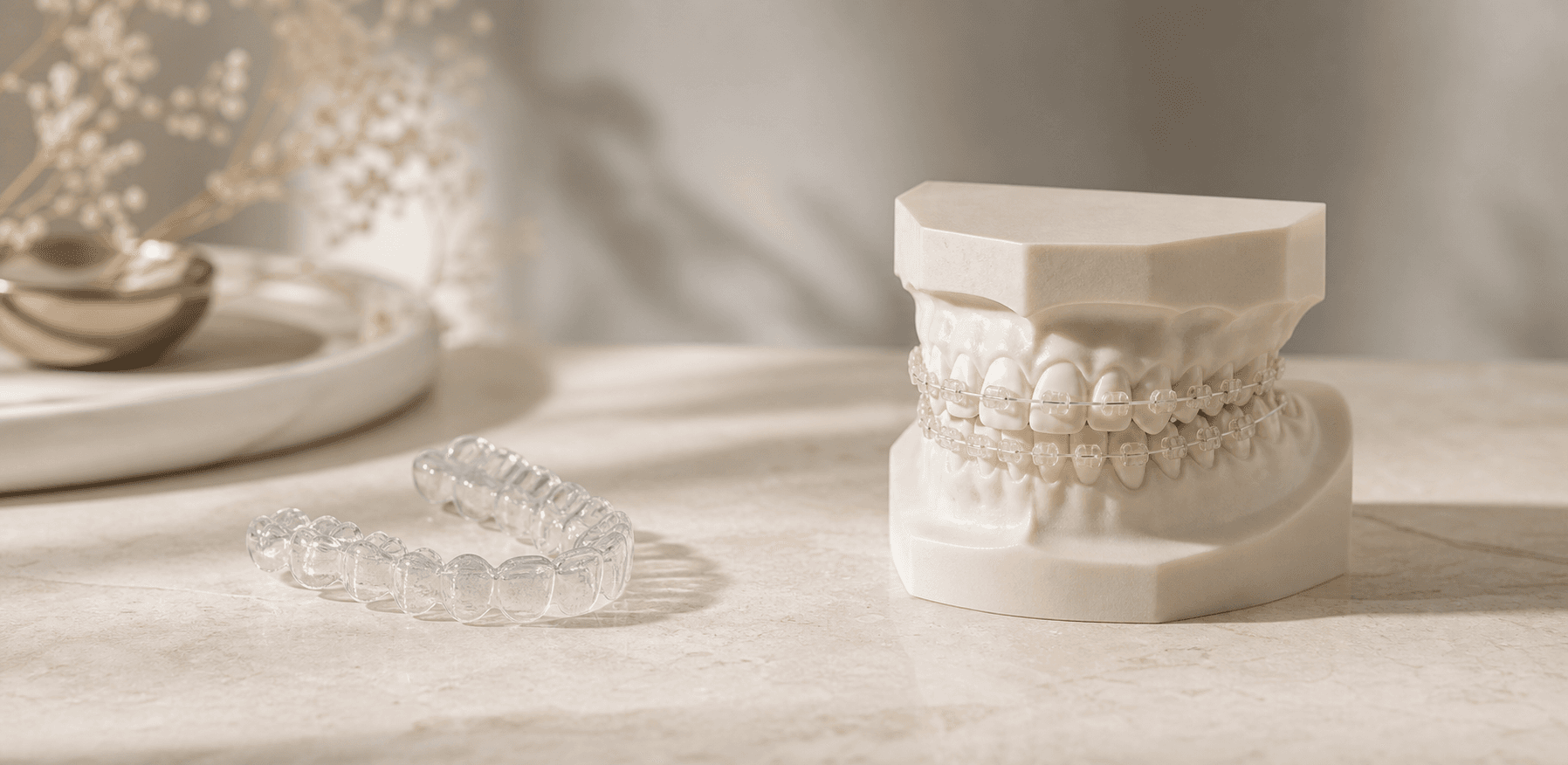
Invisalign uses a series of clear, custom-made trays — the aligners — that fit snugly over your teeth like a thin, transparent shell. They are made from a smooth medical-grade plastic and are designed to be nearly invisible at a normal conversational distance, which is much of their appeal. Unlike braces, they are not fixed to your teeth; you take them out to eat, drink anything but water, brush, and floss.
Crucially, they come as a sequence, not a single device. You wear each aligner for a set stretch of time, then swap it for the next one in the series. Each tray is shaped slightly differently from the last, and it is that steady progression of small changes — rather than any one tray doing the heavy lifting — that gradually walks your teeth from where they are to where they are meant to be.
The scan, the plan, and the preview
Treatment starts with a consultation to confirm that Invisalign is a sensible option for your situation. From there, instead of the goopy putty impressions of years past, a digital scanner captures a detailed three-dimensional model of your teeth in a few minutes. That scan becomes the foundation for everything that follows.
Using that model, your dentist maps out the full treatment digitally — planning how each tooth should move, in what order, and to what final position. One of the more satisfying parts of the process is that this often lets you see a preview: a visual projection of how your teeth are expected to look at the end, before you have committed to a single tray. Once the plan is approved, your custom series of aligners is manufactured to match it.
It is worth remembering that the preview shows a projected outcome, not a promise. The plan is built on the assumption that the aligners are worn as directed, which brings us to the part that decides everything.
How your teeth actually move
Teeth are not locked rigidly into the jaw; they sit in bone that is capable of remodelling in response to gentle, sustained pressure. Each aligner is shaped to be very slightly different from your teeth's current position, so when you seat it, it applies a controlled, gentle force to specific teeth. Over the time you wear that tray, the bone around those teeth adapts and the teeth shift a small amount toward the target.
You move to the next aligner in the series roughly every one to two weeks, as directed by your dentist. Each new tray picks up where the last left off and asks for the next small increment of movement. Because the steps are deliberately small, the process is gradual and generally comfortable, though it is normal for a new aligner to feel snug or for teeth to feel a little tender for a day or so after switching — a sign it is doing its job.
The wear-time reality — the catch nobody mentions
Here is the honest heart of it. For Invisalign to work on schedule, the aligners generally need to be worn about twenty to twenty-two hours a day. In practice that means they are in your mouth for essentially everything except eating, drinking anything other than water, and cleaning your teeth. The removability that makes Invisalign so appealing is also its single biggest catch: because you can take the trays out, you can also, all too easily, leave them out.
Teeth only move while the aligners are on them. Consistently falling short on wear time slows everything down and can pull your teeth out of step with the planned sequence, so the next tray no longer fits as intended. This is the factor most within your control and the one that most often determines whether treatment finishes on time. If the discipline of near-constant wear sounds unrealistic for your routine, that is genuinely useful to know up front — fixed braces do not depend on your willpower in the same way.
How long it really takes
Timelines vary widely because cases vary widely. Minor corrections — a bit of crowding or relapse after previous orthodontic work — may wrap up in several months, while more complex bite and alignment issues can run well over a year, sometimes closer to two. A dentist can give you a realistic estimate only after assessing your specific teeth, and even then it is an estimate rather than a fixed date.
Two factors move the needle most. The first is the complexity of your case: the more, and the more difficult, the movements required, the more aligners and time it takes. The second is compliance — how faithfully you hit that daily wear target and swap trays on schedule. A straightforward case handled by a diligent wearer can move briskly; the same case with patchy wear can drag. This is why any honest answer to how long comes with a caveat about wearing them as directed.
Attachments, refinements, retainers, and braces in brief
A few practical details round out the picture. Many treatments use small tooth-coloured attachments — little bumps of bonding material fixed to certain teeth — that give the aligners something to grip so they can perform trickier movements. They are discreet and come off when treatment ends. It is also common to finish with a round of refinements: a fresh scan and a short additional series of aligners to fine-tune anything that has not quite reached the target.
When the teeth are where they should be, treatment is not truly over — teeth naturally tend to drift back toward their old positions over time. To hold the result, you wear retainers, often at night indefinitely. Skipping them is the most common way people lose the alignment they worked for.
As for Invisalign versus braces: both straighten teeth effectively, and the better choice depends on the case and the person. Invisalign wins on appearance and the freedom to remove it for meals and cleaning, but demands discipline and does not suit every problem. Braces handle the widest range of complex cases and never rely on you remembering to wear them, at the cost of visibility and comfort. A dentist is the one who can confirm which is the right tool for you.